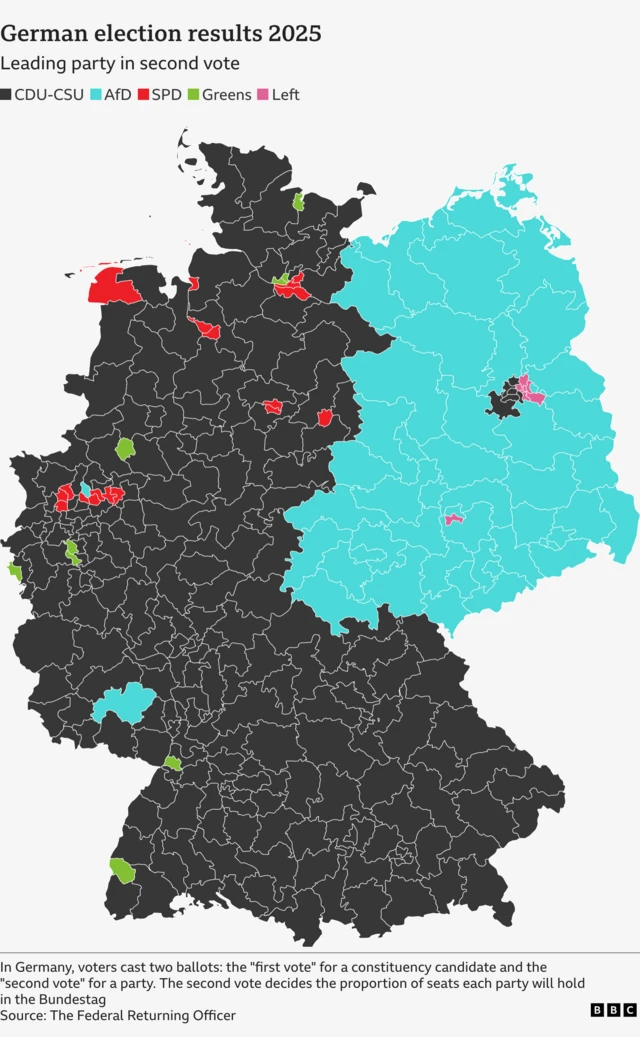
Voters in the eastern German state of Thuringia are heading to the polls on September 1 in an election that could produce the country's first far-right state government since the Nazi era — and the results are already shaking the political establishment.

The Alternative for Germany (AfD), led locally by the controversial figure Björn Höcke, is projected to finish first with roughly 30 percent of the vote, according to recent polls. That would mark a historic breakthrough for a party that has spent years on the political fringe, and it would give the AfD its first-ever role in governing a German state.
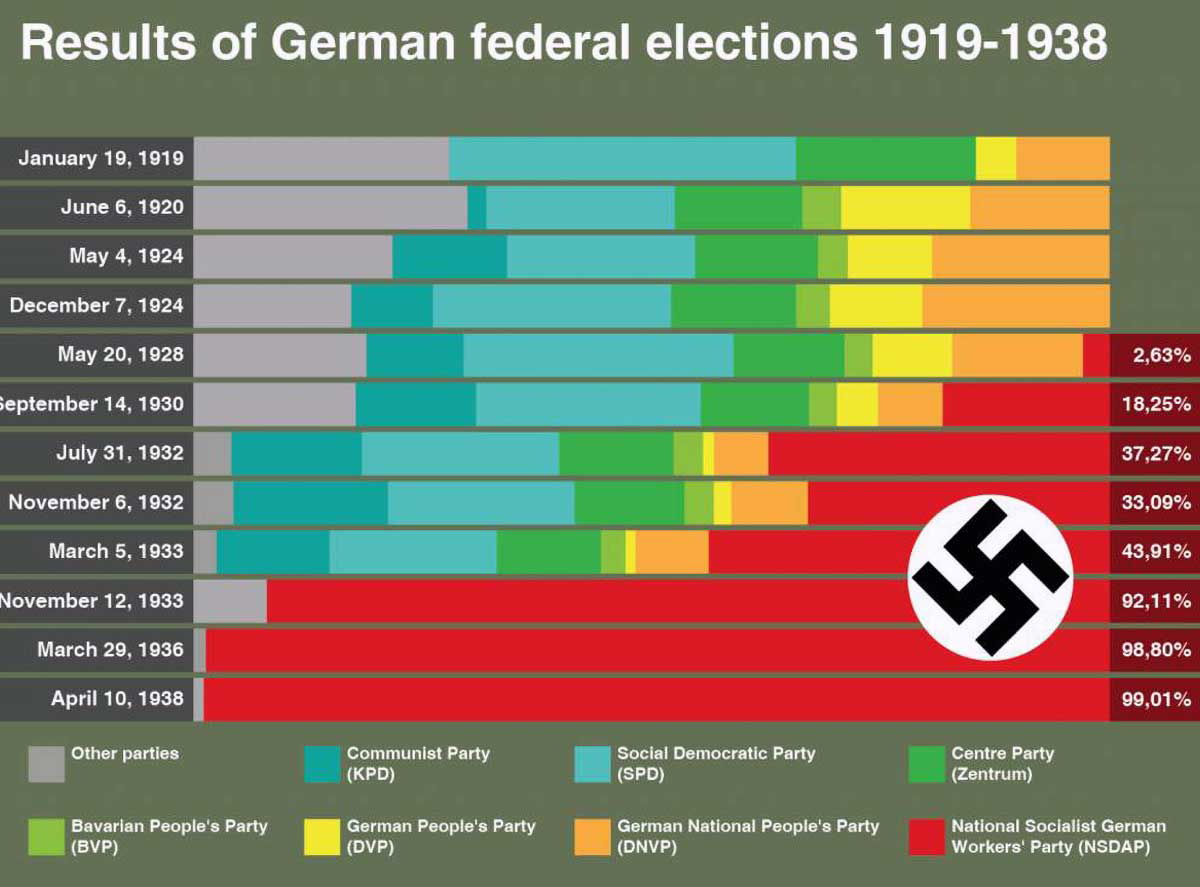
Höcke, a former high school teacher and sales manager, has become the face of the party's most radical wing. He has been fined for using a Nazi slogan, and Germany's domestic intelligence agency has officially classified the Thuringia AfD branch as a "proven right-wing extremist" group. Nevertheless, his support has only grown, particularly among voters frustrated with economic stagnation, immigration, and the perceived neglect of eastern Germany.
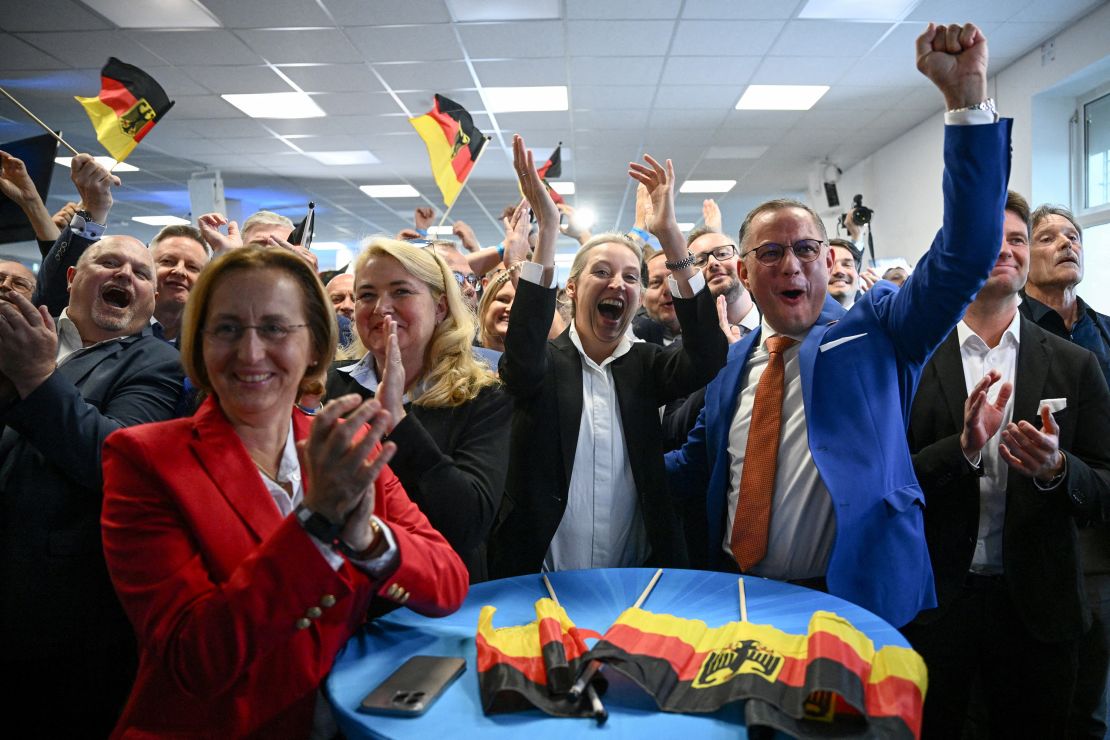
The mainstream parties — including the center-right Christian Democrats (CDU), the center-left Social Democrats (SPD), the Greens, and the Left Party — have all ruled out forming a coalition with the AfD. That means Höcke may win the most votes but still be blocked from taking power. But that firewall is under unprecedented strain: without a willing partner, building any stable majority government in Thuringia could prove nearly impossible, leaving the state in political limbo.

The election comes amid a broader surge for the AfD across eastern Germany, ahead of national elections expected in 2025. The party's leaders are divided over how close to align with former President Donald Trump and his brand of right-wing populism, a debate that has exposed deep splits within the movement just as it stands on the cusp of real power.

For many observers, the vote is more than a regional affair. It's a test of whether Germany's post-war consensus can hold — and what happens when a party deemed a threat by intelligence agencies wins at the ballot box.
/cloudfront-us-east-2.images.arcpublishing.com/reuters/MEO6XGHQ5NONZLCFCYYIZJ5IEE.jpg)
The final results are expected late Sunday night German time, with coalition talks to follow. What happens in Thuringia could set the stage for the rest of the country.