A federal appeals court ruled Tuesday that demonstrators must be given equal access to the eastern steps of the U.S. Capitol, striking down regulations that let a single member of Congress decide who gets to protest there. The decision, written by a judge appointed by President Donald Trump, carries an explicit warning for the president's push to ban select media outlets from the White House.
The ruling came from the U.S. Court of Appeals for the D.C. Circuit, in a case brought by Patrick Mahoney, a clergyman who sought to hold prayer vigils and demonstrations on the East Steps in the months after the January 6 attack on the Capitol. According to Politico, Mahoney's permit was denied in part under Capitol Police rules that bar demonstrations on the steps unless a member of Congress sponsors them.
The three-judge panel agreed that the steps can be restricted because lawmakers use them to come and go, deeming the area a "nonpublic forum." But the court found that the sponsorship carve-out created an arbitrary system.
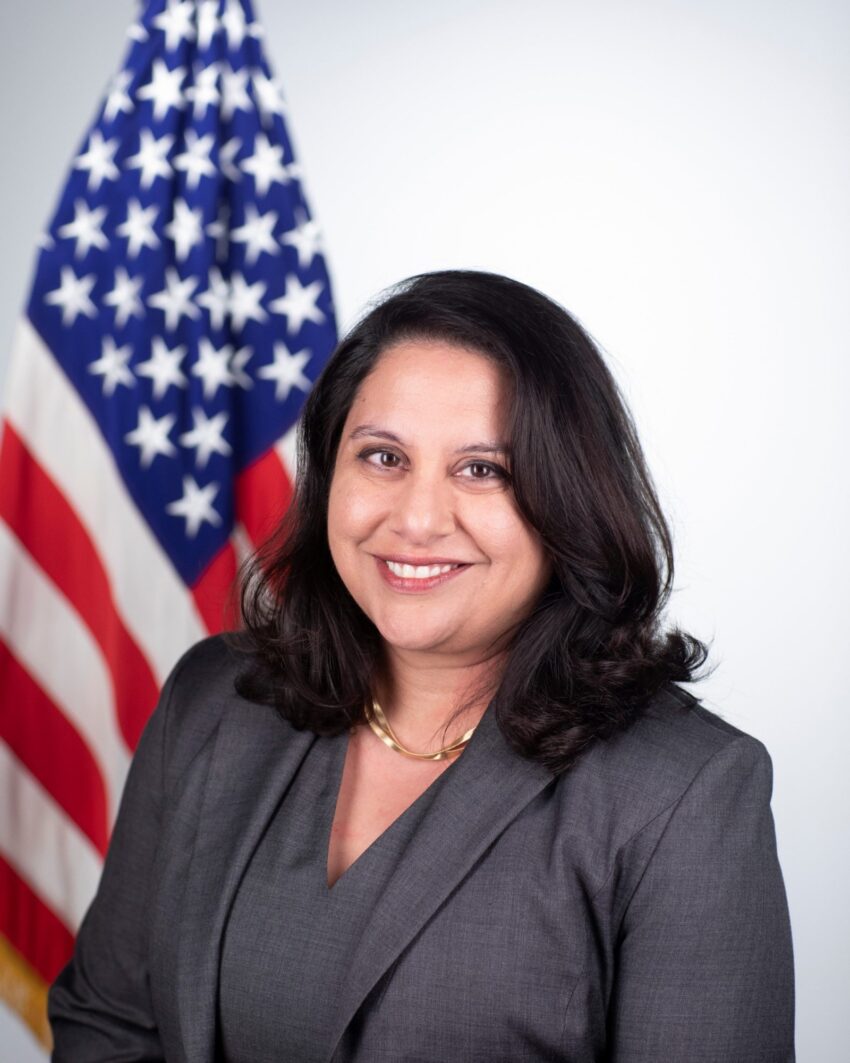
"A regulation that grants the government arbitrary control over who may speak invites the suppression of disfavored viewpoints and undermines the First Amendment's core protections," wrote U.S. Circuit Judge Neomi Rao, a Trump appointee, in the majority opinion. She was joined by Judge Karen Henderson, an appointee of President George H.W. Bush.
The court held that the Capitol Police Board traffic regulations, as applied to the Eastern Steps, are unreasonable because of what it called the "Member Exception." Under those rules, a member of Congress is both exempt from the regulations and can extend that exemption to sponsor a public demonstration.
"While the Regulations do not discriminate on the basis of viewpoint, only demonstrations favored by a current member of Congress will be permitted," the opinion reads. "This type of preferential treatment on the Steps of the Capitol is unreasonable."

The panel found that the regulations "broadly restrict expressive activity" in a physical area that is "part of a wider American tradition of public speech near legislatures." That history, along with the "surrounding circumstances" of the steps, "compel a relatively probing review" of the regulations, Rao wrote.
The court declined to define that standard of review but aligned it with a landmark 1965 Supreme Court precedent that holds it is "clearly unconstitutional to enable a public official to determine which expressions of view will be permitted."
"The Exception unreasonably allows members of Congress to serve as gatekeepers of speech on the Eastern Steps," the opinion continues. "Because the protection of unpopular speech and advocacy is central to the First Amendment, we cannot leave it to the selective enforcement of members."

The ruling is not an outright victory for Mahoney, as the court sent the case back to a district court to determine the reach of the decision. Judge Judith Rogers, a Clinton appointee, dissented in part, writing that she would have declared the lower part of the Capitol steps a public forum open to protest, per Politico.
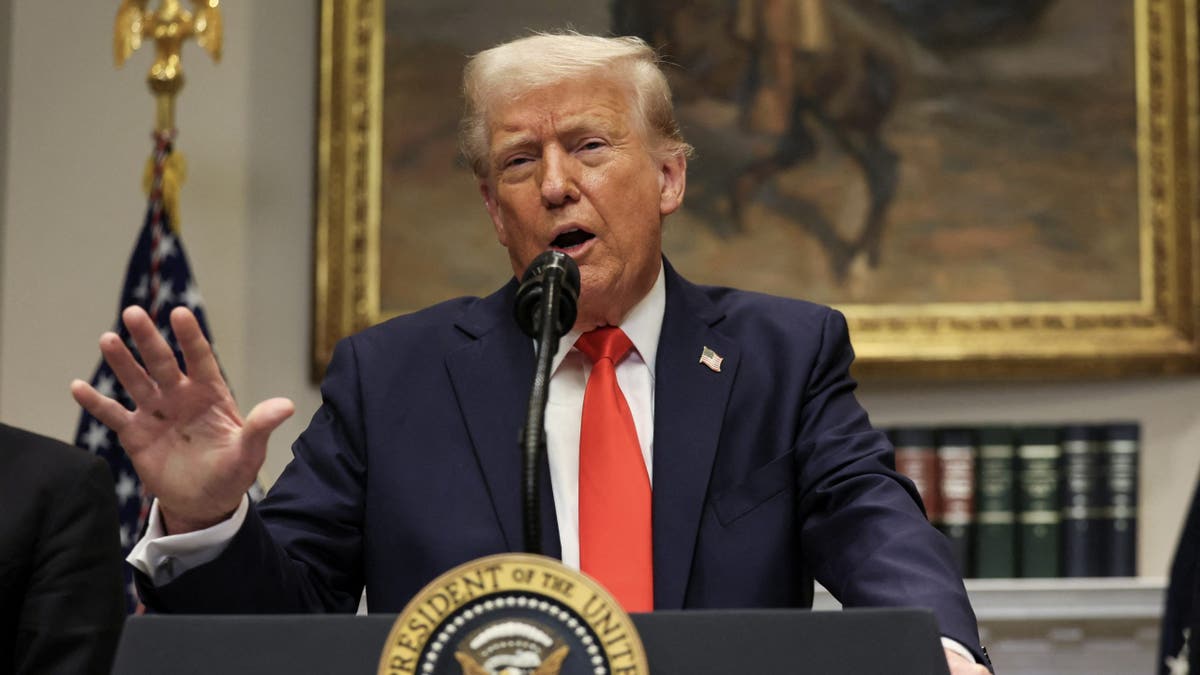
The decision lands as a direct legal challenge to President Trump's effort to ban several media outlets from the White House, a move he has cast as retaliation for coverage he labels "fake news." While the White House press room is likely to be considered a designated public forum — a category with stronger First Amendment protections than a nonpublic forum — the D.C. Circuit's framework for nonpublic forums could still apply to other parts of the White House grounds.
"A regulation that grants the government arbitrary control over who may speak invites the suppression of disfavored viewpoints," Rao wrote, a principle that could easily extend to press access.
The court also offered the Capitol Police Board an alternative: because the Eastern Steps are a nonpublic forum, the Board could prohibit demonstrations altogether, as it has done inside the Capitol. "This would preserve the purpose of the Steps as a nonpublic entrance into the Capitol," the opinion reads.
What remains unknown is how the district court will apply the ruling on remand, and whether the White House media ban case will reach the D.C. Circuit. President Trump has already said he expects to file an appeal on the assumption that he will lose in district court, per Politico. A hearing on restoring White House access for Politico, CNN, and MSNBC was scheduled to take place the day after the ruling.