Pennsylvania has now recorded its fourth measles death, a toll that would have been almost unthinkable in the United States just a decade ago.

The most recent victim was a teenager who died from subacute sclerosing panencephalitis, a rare and fatal complication of measles that can appear years after the initial infection. A coroner confirmed the cause, marking a grim milestone in an outbreak that continues to expand.

Measles was declared eliminated in the United States in 2000, meaning the virus no longer circulated continuously within the country. That achievement rested on high vaccination rates, typically above 95% coverage with two doses of the MMR vaccine. In recent years, those rates have slipped in pockets of the country, creating openings for the virus to spread.
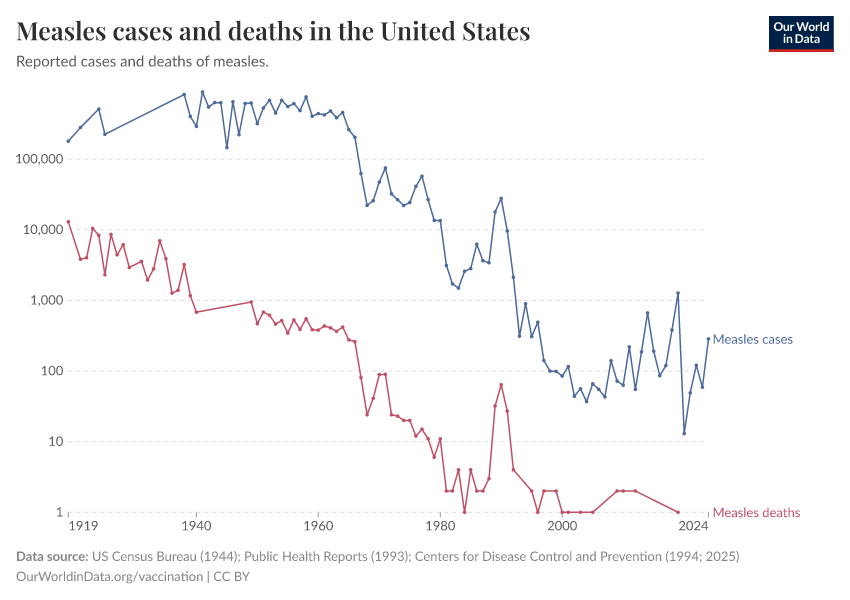
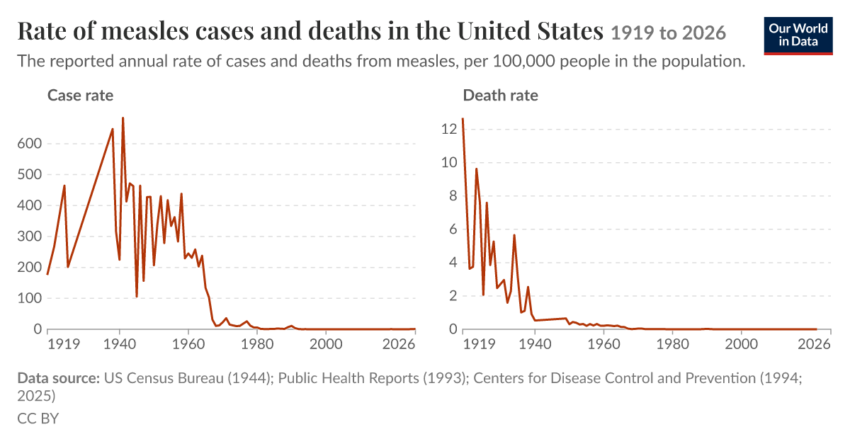
How common are measles deaths? Before the vaccine was introduced in 1963, measles infected an estimated 3 to 4 million Americans each year, sent about 48,000 to the hospital, and killed roughly 400 to 500 people annually, according to the Centers for Disease Control and Prevention. Most of those deaths were in children.

After widespread vaccination, deaths became exceedingly rare. Between 2000 and 2020, the US averaged fewer than one reported measles death per year. That is why each new death in the current outbreak draws attention — not because the case fatality rate is high overall, but because these deaths are occurring in a country where they had essentially disappeared.

The risk of death is not evenly distributed. Measles is most dangerous for children under 5, adults over 20, pregnant women, and people with weakened immune systems. Complications include pneumonia, encephalitis, and the delayed neurological condition that killed the Pennsylvania teenager.

Hospitals and clinics in Pennsylvania have been responding by setting up isolation protocols, contacting exposed patients, and pushing vaccination drives in affected communities. Public health officials say the outbreak is concentrated in areas with lower immunization coverage, where clusters of unvaccinated children have allowed the virus to spread quickly.
The bigger question is what happens next. Outbreaks in recent years have been contained within weeks or months, but the scale and duration of this one have public health experts watching closely. Whether it remains a regional crisis or signals a broader national trend depends largely on how quickly vaccination rates recover in the communities where they have fallen.