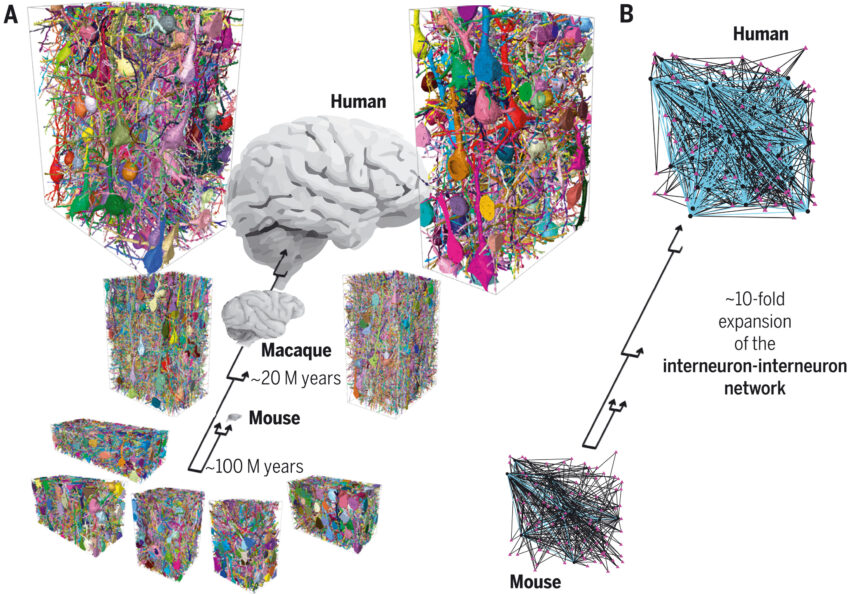
Researchers have grown human brain tissue inside living mice — and the human cells didn't just survive. They plugged into the animals' neural circuits and started sending signals.
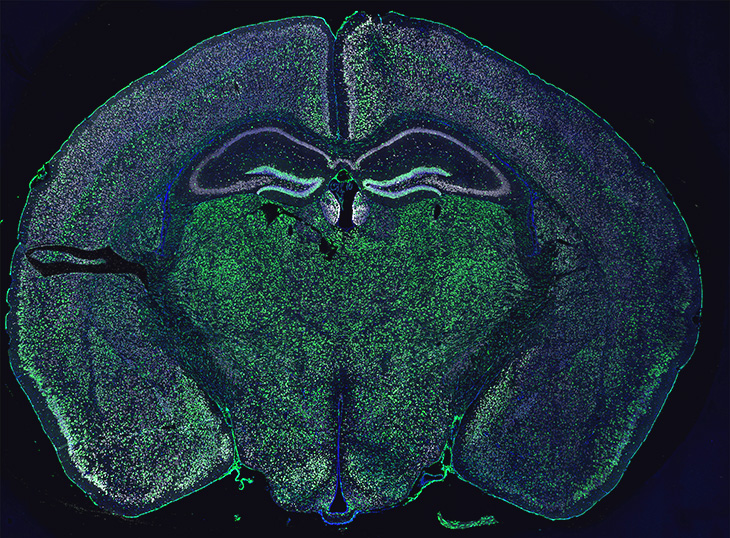
The work, published in Nature and reported by Ars Technica, the BBC, The New York Times, and The Guardian, describes a technique the researchers call developmental xenocortication: human-derived brain organoids transplanted into the cortex of mice.

Organoids are tiny, self-organizing clusters of human neural tissue grown from stem cells in a dish. Until now, they have mostly been studied in isolation. This is a step further — placing them into a working mammalian brain.

Once transplanted, the human cells matured and formed connections with surrounding mouse neurons. They responded to sensory input. In effect, part of the mouse cortex was doing its processing with human-derived cells.

The goal is not to build smarter mice. The long-term target is repair: growing replacement tissue for people whose brains are damaged by stroke, epilepsy, or traumatic injury. If human neurons can integrate into a living brain and function, the thinking goes, they might one day patch circuits that have been lost.
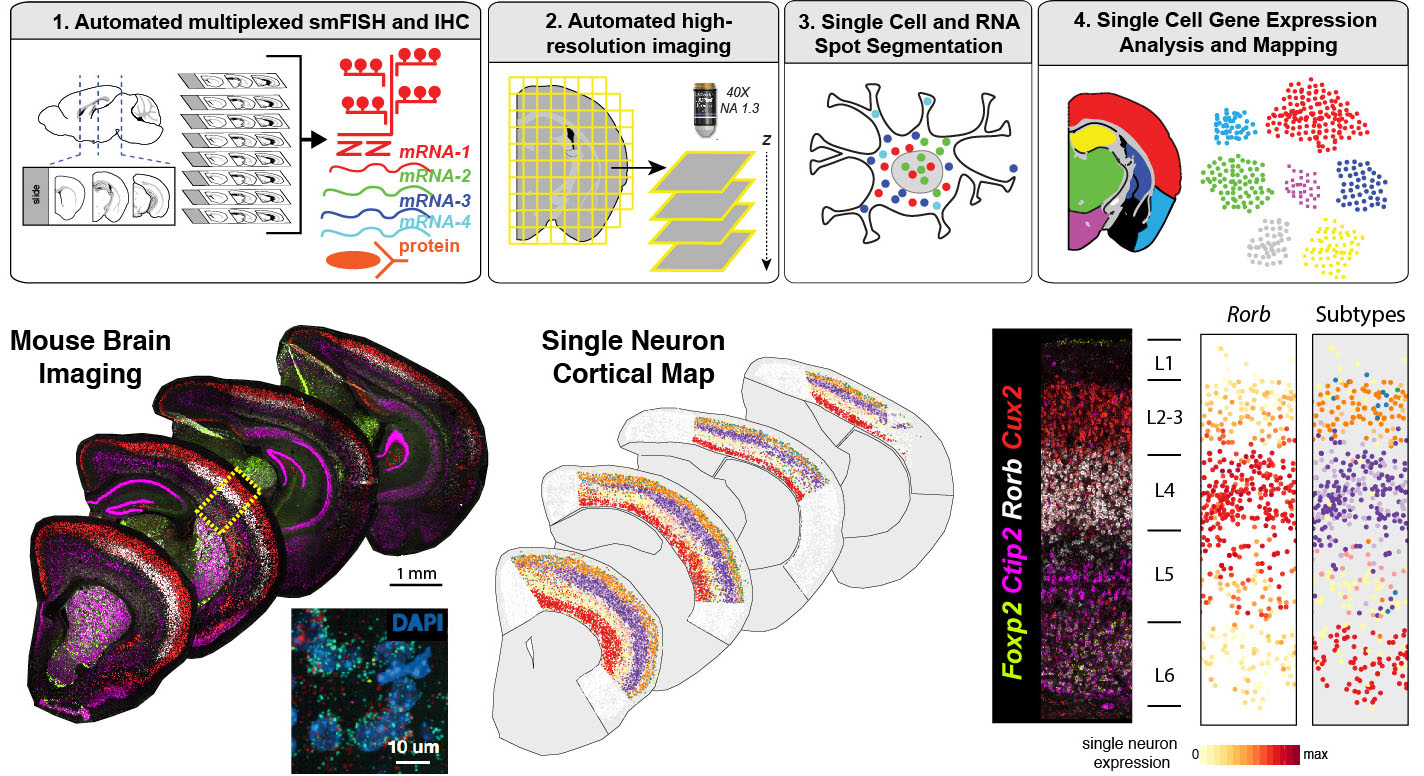
The work also raises hard questions that bioethicists have been asking for years. If human neural tissue can grow, connect, and process information inside another species, where is the line between a research model and something more? No evidence suggests the mice gained human-like cognition — but the researchers and outside ethicists agree the boundaries need clearer rules as the technique advances.
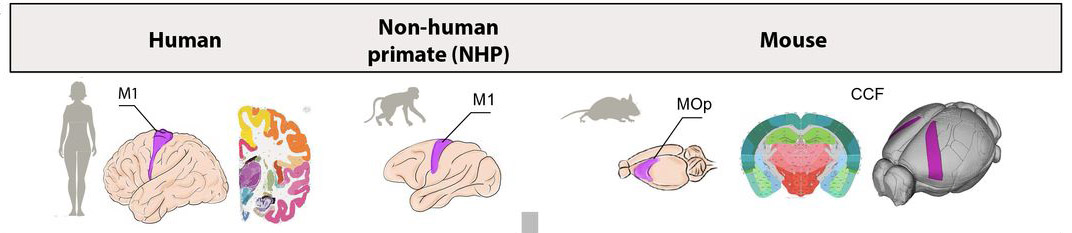
The study is a proof of concept, not a treatment. Years of work remain before anything approaches a human trial. What comes next is the question researchers are already being asked: how far should this go, and who decides?