Scientists have measured the body temperature of a Tyrannosaurus rex for the first time, and the number is surprisingly familiar: roughly 97 degrees Fahrenheit.

That puts the most famous dinosaur in the same range as a human being, and it lands squarely on the warm-blooded side of a debate that has run for decades.

The finding, reported by teams whose work was covered across CNN, The New York Times, Scientific American, and the Los Angeles Times, comes from an unlikely source — fossilized teeth.

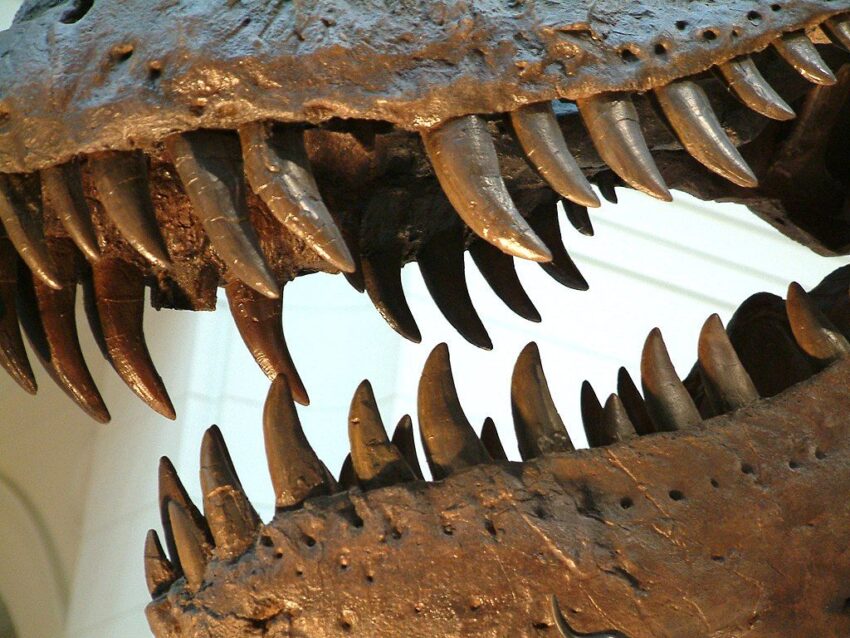
Teeth preserve chemical signatures better than most bone. By analyzing the arrangement of carbon and oxygen isotopes bound into the enamel of T. rex specimens, researchers were able to reconstruct the temperatures at which those minerals formed inside the living animal.
That technique — sometimes called isotope thermometry — is established in studies of modern animals and other fossils. Applying it to a predator this large and this old is what makes the result notable.

A body temperature near 97°F implies something bigger than a single statistic. Warm-blooded animals burn far more energy than cold-blooded ones. They need to eat more, move more, and regulate themselves internally rather than relying on the sun.

For a predator the size of T. rex, that is a serious metabolic bill. It suggests an active, mobile animal rather than a sluggish scavenger — a picture consistent with some prior evidence, but now backed by a direct measurement.
It also nudges the dinosaurs closer to birds, their living descendants, which are themselves warm-blooded. The gap between a sparrow and a T. rex just got a little narrower.
The work does not settle every question. Temperature can vary across a body, and different specimens may tell slightly different stories. But as a first direct reading from the fossil record, it gives researchers a hard number to build on.
What the team says it means for how these animals hunted, grew, and ultimately disappeared is still being worked through — and the next round of studies is likely to test whether other dinosaurs ran just as hot.